Few breakfast dishes are as instantly recognisable as a sunny-side-up egg. With its bright yellow yolk sitting proudly in the centre and its white cooked until set, it looks almost like a little sunrise on a plate. But where did the name “sunny-side up” come from, and how did this simple way of cooking an egg become so popular?
The term “sunny-side up” is an American expression. It refers to an egg that is fried on only one side, leaving the yolk visible and facing upwards. The yolk resembles the sun, which is where the cheerful name comes from. Unlike an over-easy or over-hard egg, a sunny-side-up egg is traditionally not flipped during cooking.
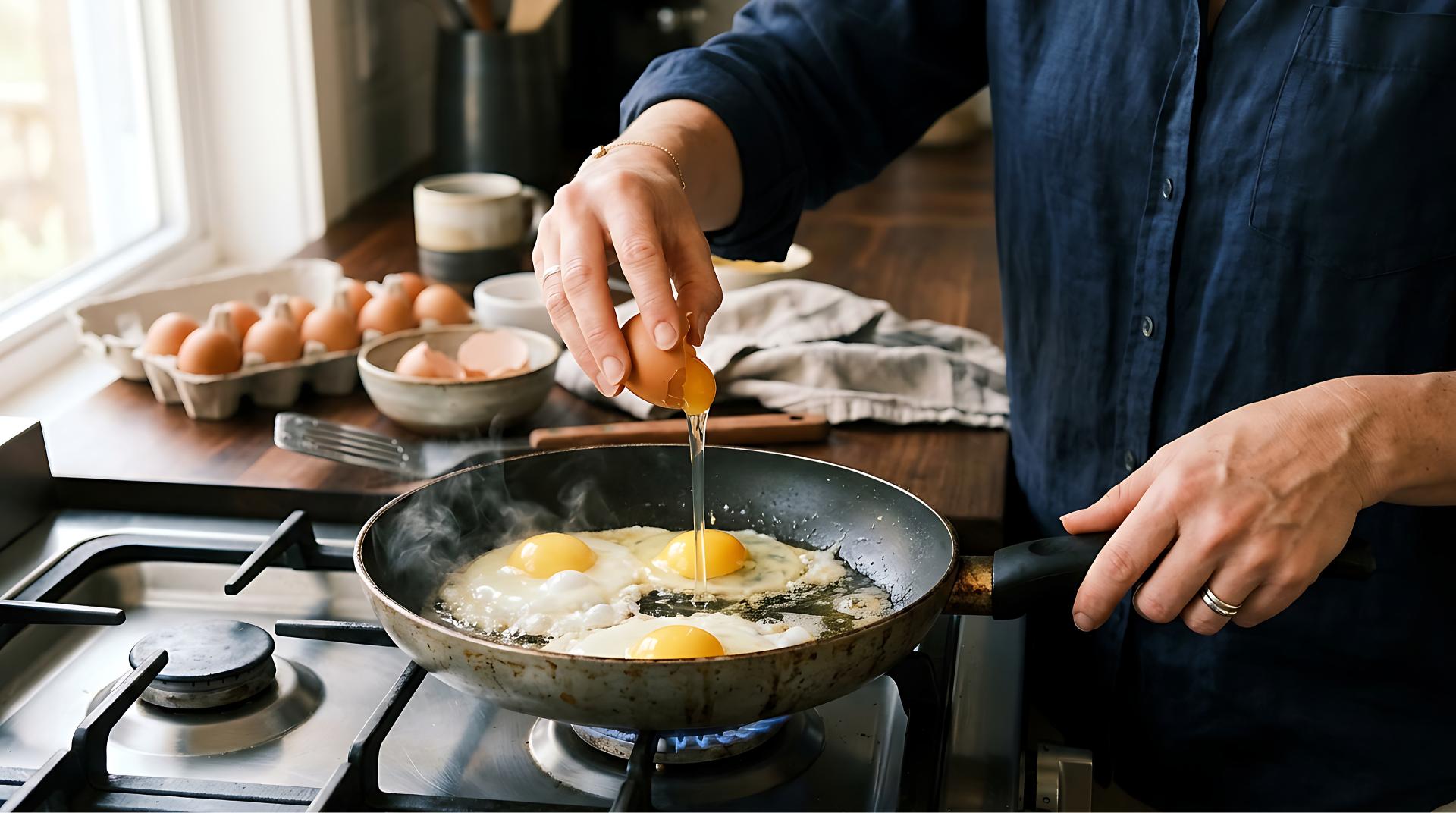
The method itself is wonderfully simple. An egg is cracked into a hot, lightly greased frying pan and cooked until the white becomes firm while the yolk remains soft and golden. Depending on personal preference, the egg can be cooked slowly over low heat for a delicate white or at a slightly higher temperature for crispy, golden edges. Some cooks cover the pan briefly to help the top of the egg white cook without turning the egg over.
Although eggs have been cooked and enjoyed for thousands of years, the specific phrase “sunny-side up” is associated with American English and became increasingly common during the 20th century. The expression captures the appearance of the finished egg rather than describing the cooking technique itself. The sunny yolk is quite literally the “sunny side” of the egg.
Sunny-side-up eggs have become a breakfast favourite around the world. In the United States, they are commonly served with toast, bacon, sausages, potatoes or pancakes. In other countries, fried eggs are enjoyed alongside rice, vegetables, bread and a variety of traditional dishes. Their versatility has helped them become a staple on breakfast menus and in home kitchens.
One of the reasons sunny-side-up eggs remain so popular is their simplicity. They require very few ingredients, usually just an egg, a little cooking fat and seasoning, yet they can make an ordinary meal feel special. The golden yolk can also be used as a delicious sauce, breaking open over toast, potatoes or vegetables.
So, the next time you enjoy a sunny-side-up egg, take a moment to appreciate its cheerful name. It is a small piece of breakfast history that perfectly describes what appears on your plate, an edible little sunrise.